Source modern white ceramic commode with remote control for elderly, pregnant women, and hip care
Compare 30 listings of modern white ceramic commode with remote control designed for elderly, pregnant women, and hip care applications. Buyers can evaluate features like flushing methods, installation types, and customization options from suppliers in Guangdong, China.
Key considerations
Products List








Comprehensive Sourcing Guide
Sourcing Guide for Modern White Ceramic Commodes with Remote Control Capabilities
Understanding the Product Category and Market Reality
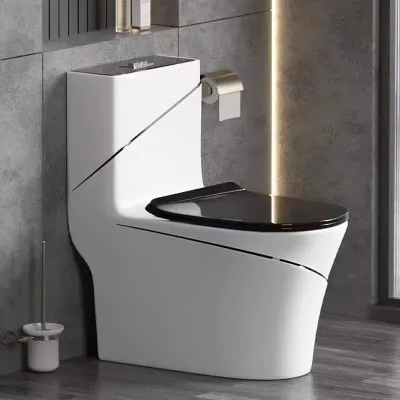
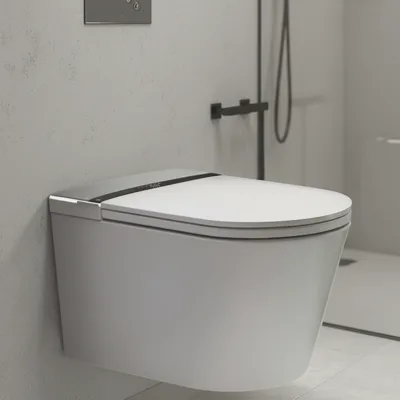
When sourcing a modern white ceramic commode with remote control capabilities, buyers must first align their expectations with the specific product attributes observed in the current market. The core keyword suggests a sophisticated bathroom fixture designed for accessibility, likely targeting elderly users or individuals with mobility challenges. However, a critical examination of available product data reveals a nuanced landscape. While the market offers white ceramic commodes, the specific attribute of "remote control" is not universally present across all listed models. For instance, specific product records indicate a "Remote Control: No" status for certain models, such as those with the model number W019 or W020, which feature a double-flush mechanism and floor-mounted installation.
This discrepancy highlights a vital first step in procurement: verifying the specific functional requirements against the actual product specifications before engaging with suppliers. The term "modern" often implies design sensibilities, and the observed data confirms that characteristics like "Design Sense," "Fashion," and "Beautiful" are common attributes for these units. The material is consistently identified as ceramic, often paired with steel frames in wheelchair-accessible variants. The "white" color is a standard aesthetic choice for hygiene and modern interior design, though buyers should confirm this in the product description as it is not explicitly listed as a universal attribute in every single record.
The target application is clearly defined in the data as "Elderly" and "Pregnant Woman," indicating that the product is part of the medical or assistive device sector rather than standard residential bathroom ware. This distinction is crucial for compliance and safety standards. The "Using Site" is noted as "Hip" and "Back," suggesting these units are often integrated into or used alongside wheelchairs, specifically lavatory wheelchairs or commode chairs that can be placed over a toilet bowl. Therefore, the procurement strategy must focus on identifying suppliers who can bridge the gap between standard ceramic fixtures and specialized assistive equipment that may include electronic flushing controls.
Technical Specifications and Functional Attributes
The technical specifications for a modern white ceramic commode with remote control capabilities are multifaceted, involving both the ceramic component and the mechanical or electronic flushing system. Based on the observed product data, the flushing mechanism is a primary differentiator. Several models utilize a "Double Fush" (Double Flush) method, while others employ "Cyclone Flushing." The flushing button type is also a specific technical detail, with some units featuring an "Upper-pressing Two-end Type" button. For a unit with remote control, the absence of a physical button or the presence of a wireless interface would be the defining technical feature.
The physical dimensions are equally critical for procurement. One observed specification lists a size of 660x365x745mm, which provides a concrete reference point for the footprint of the unit. The installation type is predominantly "Floor Mounted," which requires specific plumbing considerations during the sourcing phase. The presence of a "Buffer Cover plate: Yes" in some models suggests an attention to safety and noise reduction, which is a desirable attribute for modern installations.
Material composition is another key technical factor. While the commode itself is ceramic, the supporting structure often involves "Steel" and "PU" (Polyurethane) for seat materials. This combination ensures durability and comfort. The "Leg Rest Type" varies, with options including "Across Both Sides" or "Both Sides Separate," which impacts the overall design and functionality of the unit when used as a commode chair. The "Tilted" attribute in some models indicates an adjustable angle, which is essential for user comfort and hygiene.
For the specific requirement of remote control, buyers must scrutinize the power supply and control interface. While many observed units are "Manual," the presence of a remote control implies an electronic power supply. Buyers should verify if the remote control is battery-operated or requires a hardwired connection, and whether the system includes a backup mechanism in case of power failure. The "OEM and ODM: Accepct" (Accept) attribute indicates that customization of these technical features is possible, allowing buyers to request specific remote control interfaces that may not be standard in the catalog.
Compliance, Certification, and Safety Standards
Navigating the compliance landscape is essential for sourcing medical or assistive devices. The observed product data explicitly lists "CE" and "ISO" as standard certifications for the products in this category. Specifically, the "prod_standard" field frequently cites "CE ISO" or "ISO CE," indicating that these units meet European Conformity standards and International Organization for Standardization requirements. These certifications are non-negotiable for international trade, particularly when importing into the European Union or other markets that recognize these standards.
However, the presence of a remote control introduces additional regulatory layers. Electronic components must comply with electromagnetic compatibility (EMC) directives and low voltage directives (LVD) in addition to the general product safety standards. Buyers should request test reports that specifically cover the electronic flushing system, ensuring that the remote control does not emit harmful interference and that the electrical components are safe for use in wet environments like bathrooms.
The "prod_prop.Certification" field confirms that CE and ISO are the primary standards observed. Buyers should verify if the specific model they are sourcing has undergone testing for the remote control functionality, as standard ceramic commodes without electronics may not require the same level of electrical safety certification. The "prod_prop.prod_standard" of "ISO" suggests adherence to quality management systems, which is a positive indicator for supplier reliability.
Furthermore, the "OEM and ODM" capability suggests that suppliers are willing to customize the product to meet specific regional standards. If a buyer is targeting a market with unique electrical safety requirements, they should confirm that the supplier can provide the necessary documentation to prove compliance with those local regulations. The "Place of Origin" is listed as "Guangdong, China" or "Foshan, Guangdong," which are known manufacturing hubs. While this provides access to a robust supply chain, it also necessitates rigorous due diligence to ensure that the certifications are genuine and not merely claimed without verification.
Cost Drivers and Pricing Dynamics
The pricing for modern white ceramic commodes with remote control capabilities is influenced by several factors, including the complexity of the flushing mechanism, the inclusion of electronic components, and the level of customization. The observed price range in the market spans from $0.01 to $390 USD, a wide variance that reflects the diversity of products available, from basic components to fully integrated units. It is important to note that the lower end of this range likely represents individual parts or very basic models, while the higher end corresponds to fully featured units with advanced remote control systems.
The "MOQ" (Minimum Order Quantity) is another significant cost driver. The observed MOQ range is between 1 and 1000 units, with specific models requiring a minimum of 20 pieces. For buyers seeking a single unit or a small batch, the unit cost will be significantly higher due to the lack of economies of scale. Conversely, bulk orders can leverage the "OEM and ODM" capabilities to reduce per-unit costs, especially if the buyer is willing to accept standard designs rather than customizing the remote control interface.
Material costs also play a role. The use of "Steel" for the frame and "PU" for the seat adds to the manufacturing cost compared to plastic alternatives. The "Buffer Cover plate" and "Adjustable Height" features also contribute to the overall price. Buyers should be aware that the "Remote Control" feature, if not standard, may incur an additional charge for the electronic module and the associated assembly labor.
Additionally, the "prod_packing" specification of "1PCS/CTN" or "1PCS/ Carton" affects logistics costs. Efficient packaging is crucial for preventing damage to the ceramic and electronic components during transit. Buyers should consider the cost of protective packaging and whether the supplier offers consolidated shipping options to reduce freight expenses. The "Lead Time" is not explicitly stated in the data, but buyers should anticipate a range based on the complexity of the order and the supplier's production capacity.
Typical Applications and User Demographics
The primary applications for modern white ceramic commodes with remote control capabilities are centered around healthcare and assisted living. The observed "Application" attributes explicitly list "Elderly" and "Pregnant Woman," indicating that these units are designed to support users with limited mobility or specific physical needs. The "Using Site" being "Hip" and "Back" further reinforces this, suggesting that the units are often used in conjunction with wheelchairs or as standalone fixtures in bathrooms designed for accessibility.
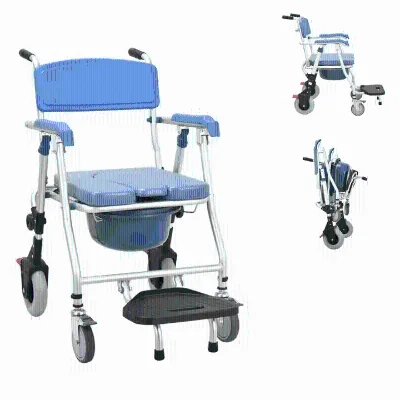
The "Type" of product is frequently identified as "Wheelchair" or "Lavatory Wheelchair," which implies that the commode is either a specialized chair that fits over a toilet or a fixture integrated into a wheelchair system. This dual functionality is a key selling point for buyers in the medical equipment sector. The "Folded" attribute varies, with some models being "Folding" and others "Non-Folding," which impacts storage and portability. For facilities with limited space, folding models may be preferred.
The "Function" of the unit is described as "easy to clean toilet," a critical feature for hygiene in healthcare settings. The "Flush method" options, such as "Double Fush" or "Cyclone Flushing," ensure efficient waste removal, which is essential for maintaining a sanitary environment. The "Remote Control" feature, when available, enhances usability for users who may struggle to reach or operate physical flush buttons, providing a higher level of independence.
Buyers should also consider the "Using Ambient" of "Indoor," which confirms that these units are not designed for outdoor use. The "Installation" method of "Floor Mounted" requires a permanent setup, making these units suitable for hospitals, nursing homes, and private residences where long-term use is expected. The "Characteristic" of "Resistance to Heavy" suggests durability, which is important for high-traffic environments.
Supplier Evaluation and Quality Control Protocols
Evaluating suppliers for modern white ceramic commodes with remote control capabilities requires a rigorous approach to quality control and verification. The "Place of Origin" being "Guangdong, China" indicates a concentration of manufacturers in this region, but it also necessitates careful vetting to ensure quality consistency. Buyers should request factory audits to verify the production processes, particularly for the electronic components and the ceramic molding.
The "OEM and ODM" capability is a strong indicator of a supplier's flexibility and technical competence. Suppliers who offer these services are typically more experienced in handling custom requirements, such as integrating remote control systems. However, buyers must ensure that the supplier has a robust quality management system in place, ideally certified to ISO standards, to maintain consistency across production batches.
Quality control should focus on several key areas: the integrity of the ceramic body, the functionality of the flushing mechanism, and the reliability of the remote control system. Buyers should request sample units for testing, paying close attention to the "Flush Button Type" and the responsiveness of the remote control. The "Buffer Cover plate" should be checked for proper installation and durability.
The "prod_packing" of "1PCS/CTN" should be inspected to ensure that the packaging provides adequate protection for the ceramic and electronic parts. Buyers should also verify the "Condition" of the product, which is listed as "New," to ensure that no refurbished or used units are being sold as new. The "Certification" of CE and ISO should be verified with the relevant authorities to ensure they are valid and applicable to the specific model.
Long-Term Procurement and Maintenance Considerations
Long-term procurement strategies for modern white ceramic commodes with remote control capabilities must account for maintenance, spare parts availability, and lifecycle management. The "Remote Control" feature introduces a potential point of failure that requires ongoing support. Buyers should inquire about the availability of replacement batteries, remote control units, and electronic modules. The "OEM and ODM" capability can be leveraged to secure long-term supply agreements for these components.
The "Material" of "Steel" and "PU" suggests a need for regular cleaning and maintenance to prevent corrosion or wear. Buyers should establish a maintenance schedule that includes inspecting the "Leg Rest Type" and "Tilted" mechanisms for proper function. The "Flush method" should be monitored to ensure it remains efficient over time, and any issues with the "Double Fush" or "Cyclone Flushing" should be addressed promptly.
The "Installation" of "Floor Mounted" units requires that the plumbing and electrical connections remain secure. Buyers should ensure that the supplier provides detailed installation manuals and technical support for any necessary repairs. The "Characteristic" of "Design Sense" and "Fashion" implies that the aesthetic appeal should be maintained, which may require specific cleaning agents or techniques.
Finally, buyers should consider the "MOQ" and "Lead Time" for future orders. If the initial order was small, buyers should plan for larger orders to reduce unit costs. The "Location" of the supplier in "Foshan, Guangdong" should be factored into logistics planning, especially if the buyer is in a different region. Establishing a strong relationship with the supplier can help mitigate risks associated with supply chain disruptions and ensure a steady supply of high-quality commodes.
Comparative Analysis of Product Models
To facilitate informed decision-making, the following table compares key attributes of the observed product models, highlighting the variations in specifications that buyers should consider.
| Attribute | Model SC-CC02(S) | Model SC-CC01(S) | Model SC-CC10(A) | Model SC-CW06(SS) | Model SC-CW05(SS) | Model SC-CC07(S) | Model W019/W020 |
|---|---|---|---|---|---|---|---|
| Type | Wheelchair | Wheelchair | Lavatory Wheelchair | Wheelchair | Wheelchair | Wheelchair | Commode |
| Folded | Folding | Non-Folding | Tilted | - | - | - | - |
| Remote Control | Not Specified | Not Specified | Not Specified | Not Specified | Not Specified | Not Specified | No |
| Flush Method | Not Specified | Not Specified | Not Specified | Not Specified | Not Specified | Double Fush / Cyclone | Double Fush |
| Leg Rest Type | - | - | Across Both Sides | Both Sides Separate | - | - | - |
| Seat Material | - | - | PU | - | - | - | - |
| Certification | CE, ISO | CE, ISO | CE, ISO | ISO, CE | ISO | CE, ISO | CE, ISO |
| Origin | Foshan, Guangdong | Foshan, Guangdong | Foshan, Guangdong | Foshan, Guangdong | Foshan, Guangdong | Foshan, Guangdong | Guangdong, China |
| Application | Elderly, Pregnant | Elderly | Elderly | Elderly | Elderly | Elderly | Elderly |
This comparison underscores the importance of verifying specific features like remote control and flushing mechanisms before finalizing a purchase. While many models share common certifications and origins, the functional differences, particularly regarding the remote control and flushing systems, require careful selection based on the buyer's specific needs.
FAQs
Can modern white ceramic commodes include remote control features?
Some models include remote control features, but many listed units do not. Buyers must verify the specific model attributes, as records show some models explicitly state remote control is not available while others accept customization for such functions.
What certifications are required for these medical commodes?
Products in this category typically hold CE and ISO certifications. These standards are explicitly listed in the product data, ensuring compliance with international safety and quality requirements for medical and assistive devices used by elderly or pregnant users.
How are these commodes installed in indoor environments?
The standard installation method for these units is floor mounted. This permanent setup is designed for indoor use in settings like nursing homes, requiring specific plumbing considerations and ensuring stability for users with mobility challenges.
Which materials are used for the commode and seat?
The commode structure often combines ceramic with steel frames for durability. The seat material is frequently identified as PU, providing comfort, while the overall design includes features like buffer cover plates for safety and noise reduction.
What is the minimum order quantity for these products?
The minimum order quantity varies by model, with some requiring as few as one unit and others needing twenty pieces. Buyers should check specific model requirements, as the observed range spans from one to one thousand units depending on customization.
Can buyers request customization for these commodes?
Yes, customization is available for many models in this category. Suppliers accept OEM and ODM requests, allowing buyers to modify features like flushing methods, dimensions, or electronic interfaces to meet specific accessibility or design requirements.
Where are these products typically manufactured?
These products originate from manufacturing hubs in Foshan, Guangdong, China. This location is a known center for producing medical equipment and ceramic fixtures, offering access to a robust supply chain for both standard and customized units.